For years, Africa’s digital conversation has been dominated by consumer apps, fintech growth, e-commerce, mobile adoption and the promise of artificial intelligence. These are important. But they sit on top of a deeper foundation. Without secure infrastructure, trusted data systems and reliable technology operations, digital platforms remain fragile. Without local hosting and resilient power, critical data remains exposed to cost, latency, sovereignty and continuity risks. Without proper systems, institutions cannot scale.
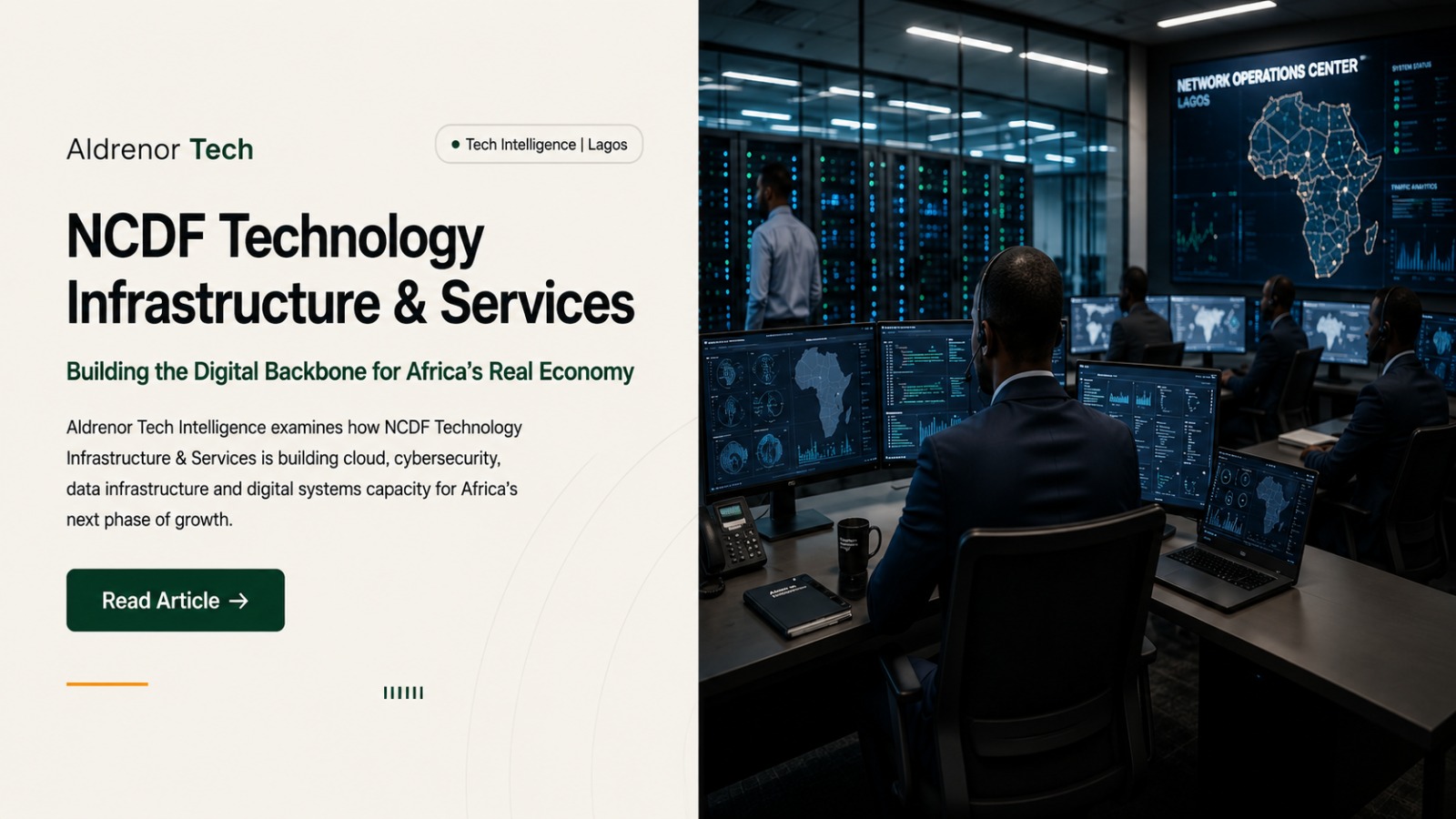
This is the strategic context behind the emergence of NCDF Technology Infrastructure & Services Limited, the dedicated technology infrastructure, digital systems and platform-services company of NCDF Group.
The company has been created to provide the digital backbone required across NCDF Group’s expanding ecosystem of investment, healthcare, education, digital trade, financial inclusion, media, diaspora engagement, data infrastructure and real-economy development platforms. Its mandate is not limited to IT support. It is designed to operate as an institutional technology infrastructure company, supporting software platforms, cloud systems, cybersecurity, data governance, digital product development, enterprise systems and managed technology services.
Technology as Institutional Infrastructure
The strategic importance of NCDF Technology Infrastructure & Services lies in a simple proposition: technology is now institutional infrastructure.
Healthcare platforms require secure patient systems, claims tools, health-data protection and digital continuity. Education platforms require scalable learning environments, content management, student data systems and digital delivery. Digital trade platforms require supplier onboarding, inventory visibility, logistics workflows, documentation and marketplace coordination. Financial inclusion platforms require secure onboarding, agent systems, data controls and transaction-support infrastructure. Media and intelligence platforms require publishing systems, video storage, subscription tools, analytics and distribution capability.
NCDF Group’s operating architecture increasingly depends on technology that is secure, scalable and governed. NCDF Technology Infrastructure & Services exists to provide that capability.
Across the Group, the company is expected to support platforms including LifeCome Healthcare & Health Energy, Konto Financial Group, AfriGo Digital Economic Zone, CoopX, NCDF Knowledge Institute, Aldrenor, EmergX and other Group-aligned initiatives. Its work will cover websites, portals, learning systems, investor data rooms, healthcare technology, digital trade tools, marketplace infrastructure, cloud environments, cybersecurity controls, data systems and internal reporting platforms.
This makes the company a core execution layer within the NCDF ecosystem.
Why Nigeria Needs More Than Apps
Nigeria’s digital economy is expanding quickly, but the country’s infrastructure base is still catching up. Data-centre demand is being driven by fintech, cloud adoption, enterprise digitisation, data-residency requirements, AI workloads, public-sector transformation, healthcare technology, education platforms and the need for local digital resilience.
Industry estimates point to significant growth in Nigeria’s data-centre market over the next five years. But the opportunity is not simply about adding more server capacity. It is about building trusted, locally anchored digital infrastructure that can support institutions, businesses and communities operating in sectors where reliability and data protection matter.
Nigeria’s 2025 National Cloud Policy strengthens the case for local infrastructure by emphasising cloud adoption, data classification and local data residency. The Nigeria Data Protection Act also raises the bar for data security, privacy, breach management and responsible processing. These policy developments suggest a future in which Nigerian institutions will need more credible local infrastructure partners — not only offshore cloud accounts.
For NCDF Technology Infrastructure & Services, this creates a significant opening. The company can position itself not just as a technology vendor, but as a trusted infrastructure partner for organisations that require local hosting, secure digital operations, backup, disaster recovery, compliance support and platform continuity.
The Greenovus Data Infrastructure Opportunity
A major strategic extension of the company’s mandate is the proposed development of data infrastructure through Greenovus Data Infrastructure Limited, a dedicated project SPV promoted within the NCDF technology architecture.
Greenovus Data Infrastructure is being positioned to anchor the NCDF Sovereign Digital Infrastructure Facility, a proposed 500kW to 2MW modular Tier III-ready data-centre platform. The facility is intended to serve NCDF Group workloads, SMEs, healthcare data, learning platforms, fintech-support workloads, disaster recovery, backup, sovereign hosting and selected enterprise customers.
The project is significant for three reasons.
a. First, it creates a physical infrastructure base for NCDF’s digital ecosystem. Instead of relying entirely on external infrastructure, the Group can begin building a secure hosting and data-resilience layer for its own platforms and selected clients.
b. Second, it connects digital infrastructure with energy strategy. In Nigeria, power remains one of the most important determinants of data-centre viability. A data centre is not only a technology asset; it is a power-intensive infrastructure asset. Through the wider Greenovus Energy relationship, NCDF has an opportunity to connect data infrastructure with independent energy planning, resilience, hybrid power systems and long-term operational stability.
c. Third, the project offers a commercial route beyond internal Group use. By serving selected SMEs, healthcare providers, education platforms, enterprise clients, fintech-support workloads and institutional customers, the facility can become a revenue-generating digital infrastructure business.
Why Modular Matters
The proposed 500kW to 2MW scale is strategically important. It is large enough to be institutionally credible, but measured enough to avoid the risk of a speculative hyperscale build.
A modular model allows the project to begin with a 500kW facility, prove demand, secure anchor customers, validate power performance, test pricing and build operational discipline before expanding to 1MW and eventually 2MW. That phased approach is more suitable for a market where demand is real, but power, occupancy, financing and execution risks must be managed carefully.
The “Tier III-ready” positioning should also be handled with precision. Tier III is associated with concurrent maintainability: critical components and distribution paths can be maintained without disrupting operations. Until formal certification is obtained, the facility should be described as Tier III-ready or Tier III-designed, not Tier III-certified.
That distinction matters. Investors, enterprise customers and regulators will expect technical discipline, not marketing exaggeration.
The Business Case
The commercial logic of NCDF Technology Infrastructure & Services is built around layered revenue.
At the Group level, it can provide technology services, software development, cybersecurity, platform management, hosting, cloud support and data governance across NCDF companies. At the market level, it can provide managed hosting, backup, disaster recovery, data-room hosting, cloud migration, cybersecurity monitoring, managed infrastructure and compliance-led technology services to selected external customers.
Through Greenovus Data Infrastructure, the business case expands into colocation, rack space, private hosting, sovereign data infrastructure, disaster-recovery services, healthcare data hosting, education-platform hosting and enterprise continuity services.
This gives the company a route to generate revenue before, during and after the data-centre buildout. It can begin as a managed service and cloud-integration provider, then migrate customers into its own facility as capacity comes online.
That is a stronger model than waiting for a physical data centre before commercial activity begins.
Institutional Boundaries
NCDF Technology Infrastructure & Services must also protect role clarity. It should not present itself as a bank, investment platform, securities firm, telecom operator, HMO or regulated financial-services provider. Its role is technology infrastructure, software, digital systems, data governance, cloud, hosting, cybersecurity and platform support.
Where it supports regulated platforms — fintech, healthcare, insurance, capital markets or telecommunications — the regulated activity must remain with the appropriate licensed entity. This distinction will matter for institutional credibility, investor confidence and regulatory discipline.
The same clarity should apply to Greenovus Data Infrastructure. The SPV should own or anchor the data-infrastructure asset, customer contracts and data-centre revenue. NCDF Technology Infrastructure & Services should provide the technology sponsorship and operating capability. Greenovus Energy should provide power strategy and energy resilience. NCDF Holdings should remain the Group sponsor.
That structure is clean, bankable and easier for investors to understand.
A Platform for the Next Economy
The deeper significance of NCDF Technology Infrastructure & Services is that it positions technology as part of Africa’s productive economy, not merely as a support function.
Africa’s digital future will require secure cloud capacity, local data infrastructure, resilient hosting, strong cybersecurity, AI-ready systems, data governance, energy-backed facilities and enterprise-grade platforms. These are not optional. They are the operating rails for healthcare, education, finance, trade, media, public services and institutional investment.
By building a dedicated technology infrastructure company, NCDF Group is moving from fragmented digital tools to a coordinated technology architecture. By creating Greenovus Data Infrastructure as a dedicated SPV, the Group is moving toward physical digital infrastructure. By connecting the project with Greenovus Energy, it is recognising that digital sovereignty cannot be separated from power resilience.
The strategy is ambitious, but institutionally coherent.
NCDF Technology Infrastructure & Services is therefore not just another company in the Group structure. It is the digital backbone of the ecosystem — the layer that helps convert platforms into systems, systems into infrastructure, and infrastructure into long-term execution capacity.
For Nigeria, the opportunity is larger than one facility. It is about building local digital trust, enterprise resilience, sovereign data capacity and technology infrastructure for the real economy.
For NCDF Group, it is a decisive step toward becoming not only a platform-building institution, but a builder of the infrastructure behind platforms.