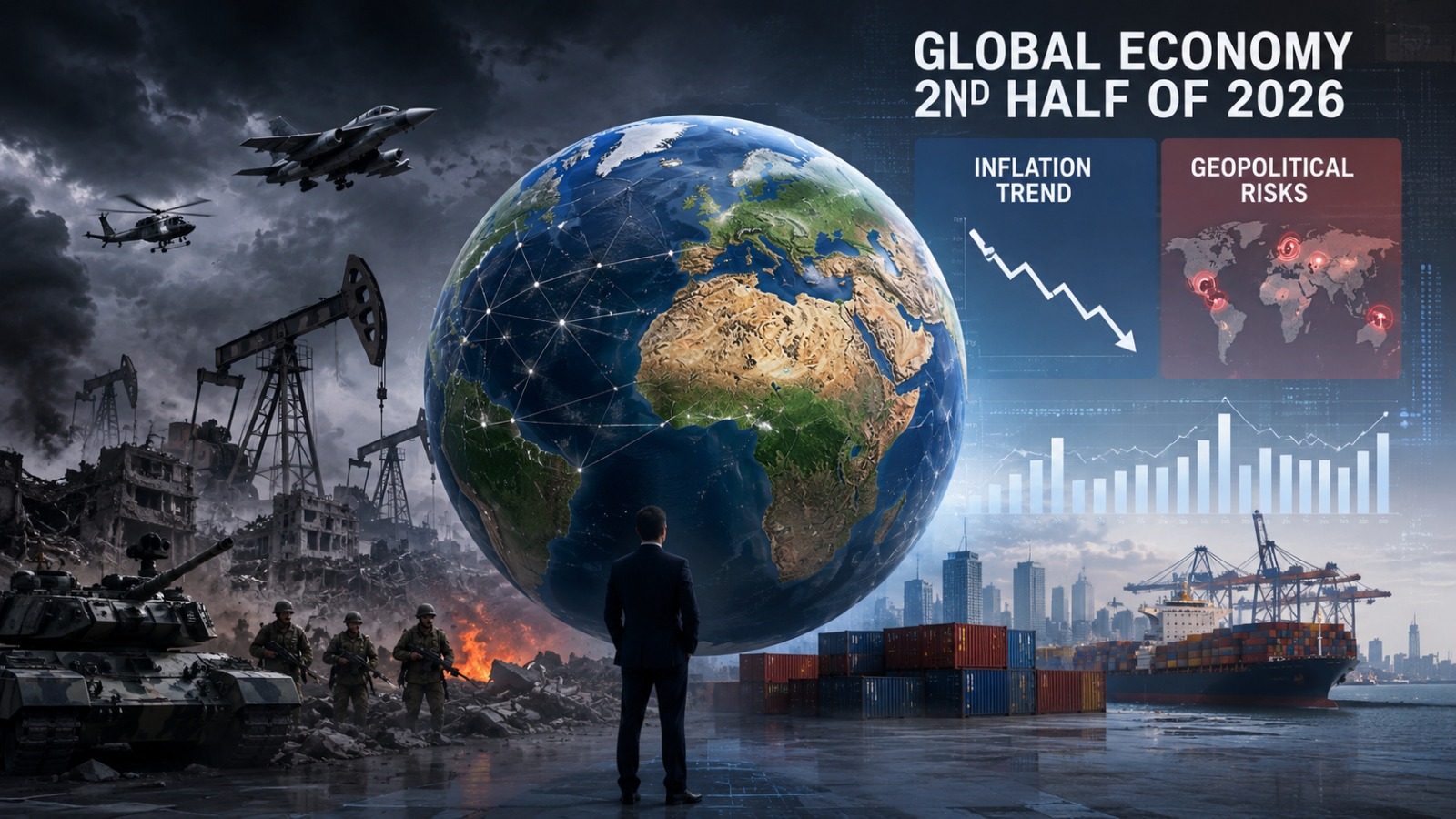
Across major economies, inflation has moderated from the elevated levels that followed the pandemic and subsequent energy shocks. However, central banks remain cautious, with policymakers seeking to preserve price stability while avoiding measures that could unnecessarily weaken investment, employment and consumer demand.
At the same time, geopolitical developments continue to influence economic decision-making. Conflicts affecting strategic trade routes, renewed competition among major powers and changing industrial policies are reshaping investment priorities, global supply chains and international capital flows.
Businesses are responding by strengthening operational resilience rather than pursuing aggressive expansion. Multinational corporations are increasingly diversifying suppliers, regionalising production and investing in digital technologies to reduce exposure to external disruptions. Boardrooms are also placing greater emphasis on geopolitical risk assessment as a core component of corporate strategy.
Financial markets have reflected this cautious outlook. Investors remain attentive to inflation data, employment indicators and central-bank communications while balancing expectations for interest-rate adjustments against concerns over slower global growth.
Emerging economies continue navigating additional challenges, including higher external borrowing costs, currency volatility and infrastructure financing needs. At the same time, many governments are accelerating reforms designed to attract long-term investment in manufacturing, renewable energy, digital infrastructure and critical minerals.
Technology is also reshaping the global economic landscape. Artificial intelligence, advanced manufacturing and automation are driving new investment opportunities while compelling businesses to rethink productivity, workforce development and competitive positioning.
Economists note that the global economy is undergoing a structural transition rather than experiencing a conventional cyclical slowdown. The interaction between technological innovation, demographic change, geopolitical fragmentation and climate-related investment is redefining how nations compete and how businesses allocate capital.
For policymakers, the challenge is increasingly centred on sustaining growth while maintaining fiscal discipline and economic resilience. For corporate leaders and investors, the priority is adapting to an environment where agility, strategic foresight and long-term planning are becoming as valuable as financial performance itself.
As the second half of 2026 begins, the defining question for governments and businesses is no longer whether uncertainty will persist, but how effectively institutions can respond to an increasingly interconnected world where economic, technological and geopolitical developments are shaping one another in real time.